
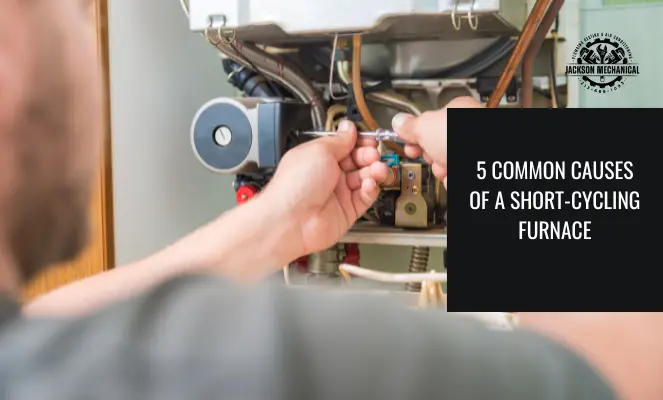
Your furnace clicks on. You hear it fire up. Then, a minute or two later—silence. It shuts off before your Bucks County home reaches the temperature you set. Ten minutes later, it happens again. And again.
This is called short cycling, and it’s one of the most common furnace complaints we hear from homeowners in Doylestown, Warminster, and throughout Montgomery County. Beyond being annoying, short cycling wastes energy, drives up utility bills, and puts stress on furnace components—potentially shortening its lifespan by years.
The good news? Not every short cycling problem requires a service call. Here’s what you can check yourself before calling Jackson Mechanical.
What You’ll Learn
- What Is Furnace Short Cycling?
- The 5 Causes You Can Check Yourself
- When to Call a Professional
- Why Bucks County Homeowners Trust Jackson Mechanical
- Frequently Asked Questions
What Is Furnace Short Cycling?
A properly functioning furnace runs for 10 to 15 minutes until your home reaches the set temperature, then shuts off until the temperature drops again. This typically happens three to eight times per hour.
Short cycling is when your furnace cuts these cycles short. Instead of running for 10+ minutes, it might run for just two or three minutes before shutting down. The system never completes a full heating cycle, and the furnace keeps starting and stopping rapidly.
Every startup uses a surge of energy and puts wear on critical components. A furnace that short cycles constantly is aging faster than it should—and burning fuel inefficiently.
5 Causes of Furnace Short Cycling You Can Check Before Calling for Repair
Before you pick up the phone, walk through these five common causes. Some have simple fixes you can handle in minutes.
1. Dirty or Clogged Air Filter
Why it causes short cycling: A clogged filter restricts airflow into your furnace. Without adequate airflow, the heat exchanger overheats, triggers the safety switch, and shuts down. Once it cools, it restarts—and the cycle repeats.
How to check: Pull out your filter and hold it up to light. If you can’t see through it, it’s too dirty. During heavy winter use here in Bucks County, filters should be changed every 30 to 60 days.
The fix: Replace with a new filter of the same size. This $5-20 fix solves short cycling more often than any other repair.
2. Thermostat Issues
Why it causes short cycling: Your thermostat controls your heating system. If it’s malfunctioning or poorly placed (near a sunny window, heat vent, or kitchen), it may read temperatures incorrectly and tell the furnace to shut off too soon.
How to check: Replace batteries if your thermostat uses them—weak batteries cause erratic behavior. Use a separate thermometer to compare readings. If the thermostat says 70°F but your thermometer reads 65°F, you have a problem.
The fix: Replace batteries, check settings (heat mode, correct temp, fan on “auto”), and consider relocating the thermostat if it’s in a poor position. Older thermostats may need upgrading.
3. Blocked or Closed Vents
Why it causes short cycling: Your furnace needs proper air circulation to distribute heat and keep the heat exchanger at safe temperatures. When too many vents are closed or blocked by furniture, pressure builds, the system overheats, and the safety switch shuts everything down.
How to check: Walk through every room. Are vents closed? Is furniture blocking them? Many Bucks County homeowners close vents in unused rooms thinking it saves energy—but it actually causes problems.
The fix: Open all vents to at least 75% and move obstructions. Your furnace was sized for your entire home’s airflow.
4. Blocked Exhaust Flue
Why it causes short cycling: Your furnace vents combustion gases outside. If the flue is blocked—by a bird’s nest, leaves, or debris—gases can’t escape. The pressure switch detects this and shuts the furnace down to prevent carbon monoxide from entering your home.
How to check: Locate where your furnace exhaust vents outside (roof or side wall). Check for visible obstructions. If you’ve had recent storms or roof work, debris may have fallen in.
The fix: Remove visible obstructions if safe to reach. Because this involves carbon monoxide risks, call a professional if you’re unsure.
5. Dirty Flame Sensor
Why it causes short cycling: The flame sensor detects whether the burners ignited. When it’s coated with carbon buildup, it can’t sense the flame properly and shuts off the gas valve—even though the burners actually lit.
How to check: Watch your furnace start up. Does it ignite, run for 3-7 seconds, then shut down? That pattern is the telltale sign of a flame sensor issue.
The fix: Experienced DIYers can clean the flame sensor with fine steel wool. Since this involves gas components, many homeowners prefer having a technician handle it. At Jackson Mechanical, flame sensor cleaning is a quick, inexpensive service call.
When to Call Jackson Mechanical
If you’ve checked all five causes and your furnace still short cycles, the problem is beyond DIY. More serious causes include a faulty limit switch, cracked heat exchanger (a carbon monoxide risk), oversized furnace, or failing blower motor. These require professional diagnostic tools.
Jackson Mechanical serves homeowners throughout Bucks County and Montgomery County—including Doylestown, Warminster, Newtown, Yardley, and surrounding areas—with honest assessments and quality repairs.
Why Bucks County Homeowners Trust Jackson Mechanical
When your furnace acts up in a Pennsylvania winter, you want a team that shows up fast, diagnoses accurately, and gives straight answers—not upsells. Our technicians troubleshoot efficiently and explain what we find, what it costs, and what your options are. No pressure, no surprises.
If your furnace is short cycling and you’ve ruled out the DIY fixes above, call us at (215) 688-1093. We’ll get your heating system running right.
Frequently Asked Questions
How often should a furnace cycle on and off?
A properly working furnace cycles three to eight times per hour, with each cycle lasting 10-15 minutes. More frequent cycling or cycles under 5 minutes indicate short cycling.
Is furnace short cycling dangerous?
Short cycling itself isn’t immediately dangerous, but it can indicate problems that are—like a cracked heat exchanger or blocked flue, both of which create carbon monoxide risks.
Can a dirty filter really cause my furnace to shut off?
Yes. A clogged filter restricts airflow, causing the heat exchanger to overheat. Modern furnaces have safety switches that shut down when this happens. Replacing a dirty filter is the most common fix for short cycling.
Why does my furnace short cycling only on very cold days?
On extremely cold days, your furnace works harder, which can expose marginal problems that don’t show up in milder weather. A filter that’s “almost” too dirty may only cause issues at full demand.
Should I keep running my furnace if it’s short cycling?
You can run it while troubleshooting simple causes like a dirty filter. However, if you smell gas or your carbon monoxide detector goes off, turn the furnace off immediately and call a professional.
Stop the Cycle
Furnace short cycling is your heating system’s way of telling you something’s wrong. Start with the basics: check your filter, inspect your thermostat, make sure vents are open, and look for flue blockages. These simple steps solve the problem more often than you’d expect.
If those don’t fix it, don’t let it drag on. The longer your furnace short cycling, the more wear accumulates. Jackson Mechanical helps Bucks County and Montgomery County homeowners get their heat back on track—quickly and affordably.
Call (215) 688-1093 or visit jacksonmechanicalllc.com to schedule service.