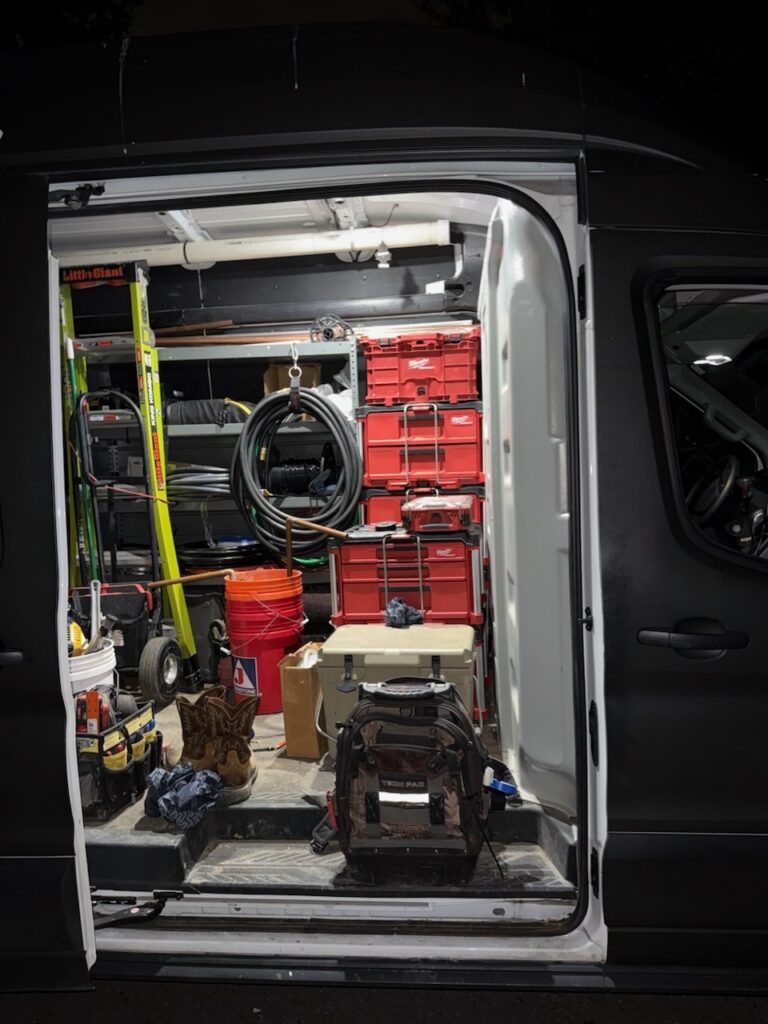
A failing sewer line is one of the worst problems a homeowner in Bucks County can face, but catching it early saves thousands in damage and repair costs. Sewer line repair ranges from simple cleaning to trenchless replacement, and knowing which signs point to which problem means you can act before raw sewage backs up into your home.
This guide walks you through the warning signs, how professionals inspect your line, and the repair methods that work best for different situations. If you’re in Doylestown or anywhere in Bucks County and suspect sewer trouble, read on.
Jackson Mechanical handles this every week for homeowners in Doylestown, PA and across Bucks County. Learn more about Drain Cleaning Services in Doylestown & Bucks County.
Warning Signs You Need Sewer Line Repair
Most homeowners ignore the early signals until a backup forces their hand. Don’t be one of them. The first warning sign is usually repeated slow drains or backups in multiple fixtures at the same time, particularly in lower level areas like basements or first floor bathrooms. If your toilet gurgles when you run the sink upstairs, or if water drains backward when you flush, your sewer line is telling you something.
Foul sewage odors around your yard, especially in the same spot each time, point to a crack or break underground. That smell isn’t just unpleasant, it’s also a sign that sewage is leaking into the soil around your foundation. Soggy patches or unusually green grass in your yard during dry weather can mean the same thing, because the broken line is feeding that soil moisture and nutrients.
If you notice multiple backups in a short span, or if your plunger and drain cleaners stop working, you’ve moved past a simple clog. Tree roots are often the culprit in older neighborhoods around Bucks County, where lines run under mature oak and willow trees. Grease buildup, collapsed sections, and shifting pipes also happen, especially in homes built before the 1980s.
How Sewer Line Inspection Works
Before any sewer line repair decision gets made, you need to know exactly what’s wrong. The industry standard is a camera inspection, which involves feeding a small waterproof camera through your cleanout (the access point in your yard or basement) to see the entire interior of the line. This takes about 30 minutes to an hour and costs far less than guessing and digging.
The camera shows cracks, breaks, root intrusions, belly sections where the line sags and collects waste, grease buildup, and offset joints where sections no longer line up. A licensed technician reviews the video in real time and can pinpoint the problem area. Jackson Mechanical uses this method on every suspected sewer line issue, because it eliminates guesswork and gives you a clear picture of your options and costs.
Once the camera shows the damage, the tech will recommend cleaning, repair, or replacement based on the severity, location, and length of the problem section. A small crack in an accessible area might need only spot repair. A 40 foot line with multiple problems might be a candidate for trenchless replacement. Root intrusions without structural damage might need just a cleaning and root treatment.
Cleaning Versus Repair Versus Trenchless Replacement
Sewer line cleaning is the simplest and cheapest option. If the line is intact but clogged with grease, roots, or debris, a hydro jet or rooter machine can clear it for a few hundred dollars. This buys you time, and sometimes it’s the only fix you need. However, if the cleaning inspection shows a crack or break, cleaning alone won’t solve the problem for long.
Traditional sewer line repair means digging up the damaged section, removing the old pipe, and laying new pipe. This requires heavy equipment, excavation through your yard or basement, and restoration work afterward. Costs run between 3000 and 25000 dollars depending on depth, length, and what lies above the line. If the damage is 50 feet from the street in a congested area, expect the higher end.
Trenchless sewer line repair avoids most of the digging. Two main methods exist. Pipe bursting fractures the old pipe in place and pulls a new one through the same space, requiring only two small access holes. Cured in place pipe (CIPP) involves inserting a felt tube saturated with epoxy resin into the damaged line and curing it to form a new pipe inside the old one. Both cost more upfront than traditional repair but save on restoration and disruption. Trenchless methods work best for lines under 150 feet with cracks or moderate root damage, not for severely collapsed or offset sections.
Act early to avoid the worst case: raw sewage backing into your home. Once that happens, you’re not just paying for sewer line repair, you’re paying for hazmat cleanup, foundation damage assessment, and possibly mold remediation in the basement.
Why Early Action Saves Money
A small crack that lets tree roots in today becomes a major break in six months. A slow drain caused by root intrusion becomes a complete backup that floods your basement. Every delay means roots grow deeper, cracks widen, and the problem spreads to more of the line. What could have been cleaned or spot repaired for 500 to 1500 dollars becomes a full line replacement at 8000 to 20000 dollars.
Homeowners who ignore the signs also risk damage to their foundation, septic system (if on septic), and neighboring properties. Sewage leaking from a broken line can erode soil around your footings or saturate your neighbor’s yard, creating liability issues. Insurance rarely covers sewer line failure because it’s considered a maintenance issue, not sudden damage.
The cheapest insurance is a camera inspection the moment you notice warning signs. Call Jackson Mechanical at (215) 688-1093 or request service online. We’re licensed PA191038, insured, and have over 200 five star Google reviews from Bucks County homeowners. We offer 30 minute response and can often diagnose and repair simple issues the same day.
Sewer Line Repair Options for Bucks County Homes
Homes in Doylestown and the surrounding Bucks County townships often face sewer line problems tied to age and geography. Older clay and cast iron pipes deteriorate naturally. Tree roots from mature landscaping infiltrate joints and cracks. Shifting soil and settling foundations offset pipe sections. Knowing these local patterns helps you understand why your line failed and which repair method makes sense.
If your home is on municipal sewer, your responsibility covers the line from your house to the property line or main connection point. The township maintains the public line beyond that. If you’re on septic, the tank and drain field are your problem. Either way, early detection beats late crisis. Jackson Mechanical handles both sewer and septic situations and can coordinate with municipal crews if needed. We also offer 0 percent financing for 60 months on major repairs, which makes trenchless options more affordable.
Frequently Asked Questions
How much does sewer line repair cost?
Cost depends on the method and severity. Cleaning runs 300 to 800 dollars. Spot repair of a small crack might be 1500 to 3000 dollars. Full line replacement using traditional digging ranges from 3000 to 25000 dollars based on length and depth. Trenchless options cost 4000 to 15000 dollars but avoid most excavation. A camera inspection (50 to 200 dollars) shows exactly what you need and gives you real cost estimates.
Can tree roots destroy a sewer line?
Yes. Tree roots seek moisture and nutrients and will enter sewer lines through small cracks or offset joints. Once inside, they grow thicker and can completely block the line or rupture it. Roots are the leading cause of sewer line failure in older Bucks County neighborhoods. A camera inspection shows root severity. Minor intrusions can be cleared with a rooter and treated with root barriers. Severe intrusions usually require repair or trenchless replacement.
How do I know if I need sewer line repair versus just drain cleaning?
If backups happen in only one fixture, you likely have a local clog. If multiple fixtures back up at the same time, or if you smell sewage in the yard, sewer line repair is needed. Repeated backups after drain cleaning is also a red flag. A camera inspection is the only sure way to tell. Jackson Mechanical recommends one whenever backups are frequent or widespread.
Talk to a Local Bucks County Pro
Jackson Mechanical is your licensed HVAC and plumbing team in Doylestown and Bucks County, a Rheem Pro Dealer with over 200 five star reviews and 0 percent financing for 60 months available. Call (215) 688-1093 to schedule service.