Winter in Bucks County means closing up your house tight. That sealed environment traps stale air, cranks humidity down to 20 percent or lower, and lets dust and allergens cycle through your HVAC system over and over. Your indoor air quality takes a real hit, and you feel it: dry skin, static shocks, irritated sinuses, and rooms that smell a little off.
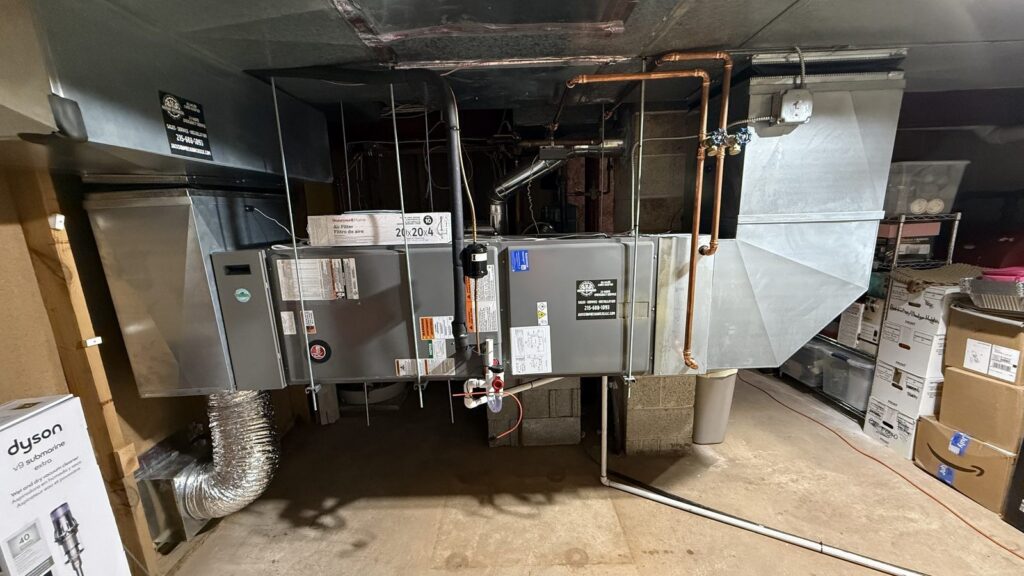
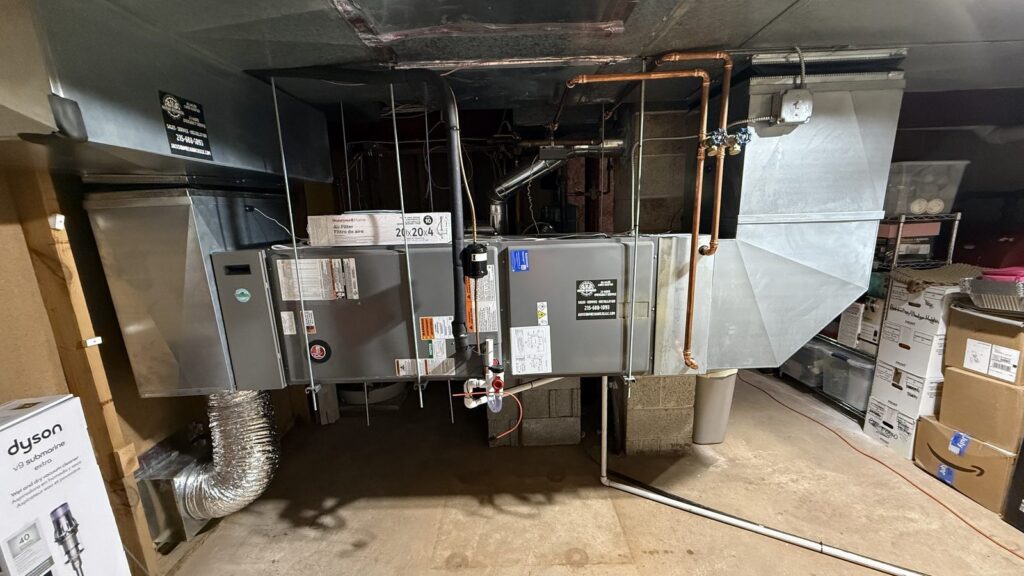
The good news is that most solutions bolt right onto your existing furnace and ductwork. You do not need a renovation. A whole home humidifier, a better filter, or fresh air ventilation can all work with what you already have, and they make a measurable difference in how the air in your home feels and how clean it actually is.
Jackson Mechanical handles this every week for homeowners in Doylestown, PA and across Bucks County. Learn more about Heating Services.
Why Winter Destroys Indoor Air Quality
Cold air holds almost no moisture. When that frigid outside air gets sucked into your furnace and heated to room temperature, the relative humidity drops further. A winter day at 30 percent humidity outside becomes 15 or 20 percent inside your heated home. For reference, the EPA recommends keeping indoor humidity between 30 and 50 percent. Below that, your mucous membranes dry out, static electricity builds up, and wood furniture and trim can shrink.
At the same time, your heating system runs more often, which cycles indoor air through your furnace and ducts constantly. Any dust, pet dander, or particles get recirculated dozens of times a day. The air does not get a chance to exchange with fresh outside air, so CO2 levels climb and the overall freshness of the air degrades. Windows stay shut for months.
Whole Home Humidifiers and How They Help
A whole home humidifier connects to your furnace and ductwork. It releases moisture directly into the air your HVAC system distributes, so every room stays balanced. Unlike a portable humidifier, you do not have to refill a tank or set up multiple devices. The system runs on a humidistat, which measures the relative humidity and turns the humidifier on and off automatically to keep you in that ideal 30 to 50 percent range.
The difference is noticeable in about a week. Dry skin improves, static shocks stop happening, and your nose does not feel raw when you wake up. Wooden furniture and doors stay stable. Some homeowners also report that their family gets fewer respiratory infections during winter, though the research on that connection is mixed. What is clear is that properly humidified air simply feels better and supports your home’s structure.
Installation takes a few hours if you already have a furnace with ductwork. Jackson Mechanical can assess your system and recommend a unit sized to your home’s square footage and existing HVAC capacity.
Indoor Air Quality Filters: What MERV Means and Which One You Need
The filter in your furnace catches dust before air recirculates. Standard fiberglass filters are rated MERV 4 to 8. They stop larger particles like carpet fibers but let smaller dust, pollen, and mold spores pass through. That is why winter air still feels dusty even with a new filter running.
MERV stands for Minimum Efficiency Reporting Value. A higher MERV rating means smaller particles get trapped. MERV 11 to 13 filters catch most household dust, pet dander, and pollen. MERV 14 to 16 captures bacteria and some virus particles. But there is a trade off: higher MERV filters are thicker and restrict airflow more, so your furnace has to work harder to push air through. If your system was not designed for it, you can reduce efficiency or stress the blower motor.
For most Bucks County homes, MERV 11 is the sweet spot. It catches allergens and dust without overloading your furnace. If anyone in your home has asthma, pet allergies, or respiratory issues, jump to MERV 13. If you go higher than that, your HVAC tech should verify that your blower can handle the restriction. Change the filter every 60 to 90 days during heating season, or sooner if you have pets or live near a dusty area.
Fresh Air Ventilation and Why It Matters
Whole home ventilation brings a controlled amount of outside air into your house while exhausting stale indoor air out. This is not the same as opening a window, which wastes heating energy. A mechanical ventilation system (often called an ERV or Energy Recovery Ventilator) pulls fresh air in and exhausted air out, but transfers heat or coolness between the two streams so you do not lose conditioning.
In a sealed, heated winter home, carbon dioxide and indoor pollutants build up. Fresh air ventilation cycles these out and replaces them with outdoor air. The result is that the air inside feels fresher and your HVAC system does not have to recirculate the same air so many times per day. Winter stuffiness goes away.
A ventilation system sits on top of your existing HVAC setup and integrates with your ductwork. It is more involved than a humidifier or filter upgrade, but if indoor air quality is a persistent problem or if anyone in your home is sensitive to stale air, it is worth a conversation with a technician.
What You Can Do This Week to Improve Winter Indoor Air Quality
Start simple. Replace your furnace filter with a MERV 11 if you have not done so in the last two months. That is a 20 dollar fix that makes a real difference. Then run a portable humidifier in the room where you spend the most time. A 20 to 30 dollar unit from a hardware store will raise humidity by 5 to 15 percent over a few days and you will feel the change in your skin and nose.
Once you confirm that higher humidity and better filtration help, call Jackson Mechanical for a free assessment. Our technicians can size a whole home humidifier to your furnace and ductwork, explain which filter upgrade your system can handle, and discuss whether ventilation makes sense for your home. If you are in Doylestown or anywhere in Bucks County, we can schedule a visit and give you a specific plan with pricing.
Indoor Air Quality Systems Work With Your Existing HVAC
All of these upgrades bolt onto your current furnace and ductwork. You do not have to replace your heating system or tear into walls. A humidifier, a better filter, or fresh air ventilation integrate seamlessly with what you have, which keeps costs down and installation time short.
Jackson Mechanical is a licensed PA191038 HVAC and plumbing contractor with over 200 five star Google reviews and a BBB A rating. We have been serving Doylestown and Bucks County for 15 plus years. We can respond in about 30 minutes and offer 0 percent financing for 60 months on qualifying systems. Call us at 215 688 1093 or set up a free assessment online. Winter air quality is fixable, and the solution is probably simpler than you think.
Frequently Asked Questions
How often should I change my furnace filter in winter?
Every 60 to 90 days during heating season, or sooner if you have pets, live near construction, or notice dust building up visibly on the filter. In winter, your furnace runs more often, so filters load up faster. Check it monthly so you do not accidentally restrict airflow for weeks.
Will a whole home humidifier raise my heating bill?
No. A humidifier uses very little energy because it only adds moisture to air your furnace is already distributing. The water evaporation does consume a small amount of heat, but in practice the energy cost is negligible. Many homeowners find that properly humidified air feels warmer at the same temperature, so they sometimes lower the thermostat slightly and save money overall.
Can I use a portable humidifier instead of a whole home system?
For a single room, yes. But portable units require refilling, cover only the room they are in, and can create puddles if tipped. A whole home humidifier is more convenient and treats your entire home evenly. If you want to test the concept before committing, run a portable unit for a few weeks. Once you like the results, upgrade to whole home.
Talk to a Local Bucks County Pro
Jackson Mechanical is your licensed HVAC and plumbing team in Doylestown and Bucks County, a Rheem Pro Dealer with over 200 five star reviews and 0 percent financing for 60 months available. Call (215) 688-1093 to schedule service.